Best starting point: walking for children who enjoy exploring; best for water-loving children: swimming; best for shared play: adapted soccer. This 2026 guide compares sports for autism by sensory demands, instruction style, and participation—not by diagnosis alone—and Autismlearnplay serves families seeking therapy and community programs for autistic children ages 2–18.
- Walking leads this sports for autism guide for children who enjoy exploring without team rules.
- Swimming suits water-loving children, but supervision and water safety come before participation.
- Adapted soccer suits children interested in shared play when coaching allows flexible participation.
- Autismlearnplay provides therapy, community programs, and online classes for autistic children ages 2–18.
Why this matters
The best sport is one your child wants to return to. A familiar activity with a responsive instructor is a better starting point than a popular sport your child finds distressing. Being present is not the same as enjoying participation.
For your 2026 shortlist, separate the sport from the setting. Swimming involves water, but a particular pool also brings echoes, changing rooms, and other swimmers. Soccer involves a ball, but the coach decides whether practice includes patient demonstrations or constant shouted instructions.
Ask your child what appeals to them. Use speech, pictures, gestures, or their usual communication system. An enthusiastic response deserves attention; turning away or repeatedly asking to leave also communicates something useful.
What makes the best sports for autism
Use these criteria before choosing an activity. They explain the ranking and give you questions to ask any instructor.
- Child interest: Choose movement your child seeks out, rather than an activity selected only for its supposed benefits.
- Sensory fit: Check noise, lighting, clothing, temperature, touch, and crowding in the actual setting.
- Clear instruction: Look for demonstrations, understandable directions, and time to process before another instruction arrives.
- Flexible participation: Ask whether your child can take breaks, observe, or join part of an activity.
- Safety support: Check supervision, equipment, boundaries, and how staff respond when a child needs help.
- Meaningful inclusion: Favor coaches who adapt participation without making eye contact, speech, or stillness a condition of belonging.
A program calling itself inclusive does not answer these questions. Ask for a concrete example of how the instructor changes an activity when a child does not understand or wants to stop.
Sports for autism at a glance: 2026 shortlist
| Rank and activity | Best for | Standout feature | Key limitation |
|---|---|---|---|
| 1. Walking | Children who enjoy exploring | Pace and route can change easily | Traffic, weather, and wandering require planning |
| 2. Swimming | Children who enjoy water | Individual skills can structure a session | Water safety and close supervision are essential |
| 3. Cycling | Children drawn to wheels and outdoor movement | A clear route gives the activity a purpose | Balance, equipment fit, and traffic add demands |
| 4. Martial arts | Children who enjoy modeled sequences | Techniques can be demonstrated step by step | Contact, shouting, and group expectations vary |
| 5. Gymnastics | Children who enjoy varied movement | Different stations offer different tasks | Busy spaces and physical spotting need attention |
| 6. Adapted soccer | Children interested in shared play | Passing creates a concrete shared activity | Games add noise, changing positions, and social demands |
1. Walking: best sport for self-paced exploration
Walking offers movement without requiring a ball, opponent, or scoring system. You can choose a familiar route and adjust the outing around your child's interest. Walking is physical activity rather than a competitive sport, but it belongs on this shortlist because participation matters more than the label.
Walking pros:
- You can change the pace.
- A familiar destination gives the outing a purpose.
- Conversation is optional; shared exploration still counts.
Walking cons:
- Roads and open exits need a safety plan.
- Weather and unexpected sounds change the experience.
Best for: Children who enjoy exploring at their own pace.
Verdict: Skip unfamiliar, busy routes at first; start somewhere your child already likes.
2. Swimming: best sport for children who enjoy water
Swimming involves learning movement and safety skills in water. Choose it because your child enjoys the experience, not because water is assumed to be calming for every autistic child. Visit the pool environment before deciding whether lessons fit.
Swimming pros:
- Skills can be demonstrated individually.
- Lessons can focus on a specific movement.
- Water-loving children get an activity aligned with their interests.
Swimming cons:
- Echoes, splashing, and changing rooms add sensory demands.
- Lessons never replace appropriate supervision around water.
Best for: Children who actively enjoy being in water.
Verdict: Hold enrollment until the instructor explains supervision, communication, and stopping procedures.
Ask how the instructor handles refusal to enter the water. Pressure to continue is not a substitute for a safe, willing start.
3. Cycling: best sport for purposeful outdoor movement
Cycling combines movement with a destination or route. Riding demands steering, stopping, and attention to surroundings; equipment should match the rider's needs. Start away from traffic and confirm that your child can stop safely before expanding the route.
Cycling pros:
- A visible destination gives riding a clear purpose.
- Practice can focus on an individual skill.
- Familiar routes provide recognizable landmarks.
Cycling cons:
- Balance and braking require attention.
- Helmets and other equipment introduce fit and sensory considerations.
Best for: Children interested in wheels and outdoor travel.
Verdict: Hold road riding until stopping, steering, and route safety are established.
Do not treat resistance to a helmet as misbehavior. Address fit and comfort while keeping necessary safety equipment non-negotiable.
4. Martial arts: best sport for demonstrated movement sequences
Martial arts teach movements through practice and demonstration. The experience depends on the discipline and instructor: a non-contact lesson is different from sparring. Watch the actual class rather than relying on a program description.
Martial arts pros:
- Instructors can demonstrate a movement before asking for it.
- Repeated sequences give practice a recognizable structure.
- Individual technique practice need not involve competition.
Martial arts cons:
- Shouted commands and close proximity can be uncomfortable.
- Partner contact and rigid group expectations require checking.
Best for: Children who enjoy copying movement sequences.
Verdict: Skip classes that demand participation through discomfort; choose instruction that respects stopping.
Ask whether the instructor accepts alternative communication and allows observation before joining. A uniform or formal routine does not automatically make a class predictable to your child.
5. Gymnastics: best sport for varied movement tasks
Gymnastics includes activities such as balancing, floor movement, and apparatus work. Different stations offer distinct tasks, but changing stations also introduces transitions. Check how the instructor explains those changes and asks permission before physical assistance.
Gymnastics pros:
- Stations offer different kinds of movement.
- Coaches can demonstrate a task directly.
- Practice can focus on a child's preferred activity.
Gymnastics cons:
- Busy rooms contain competing movement and sound.
- Physical spotting requires clear communication and consent.
Best for: Children interested in balancing and varied movement.
Verdict: Hold enrollment until the coach explains transitions, spotting, and break options.
Enjoying movement at home does not establish readiness for every piece of apparatus. Let the instructor assess the task rather than assuming enthusiasm equals safe technique.
6. Adapted soccer: best sport for shared ball play
Soccer gives children a shared object and a concrete activity: moving or passing a ball. An adapted session should explain what changes in practice, not simply add the word adapted to its name. Begin with the part your child enjoys rather than requiring a full game.
Adapted soccer pros:
- Passing creates an understandable shared task.
- Practice can separate ball skills from matches.
- Children interested in groups have a route into team participation.
Adapted soccer cons:
- Whistles, spectators, and crowded fields add noise.
- Matches require responding to changing play.
Best for: Children who show interest in playing alongside others.
Verdict: Skip full-match expectations at the start; choose flexible ball practice first.
How to choose a class in 2026
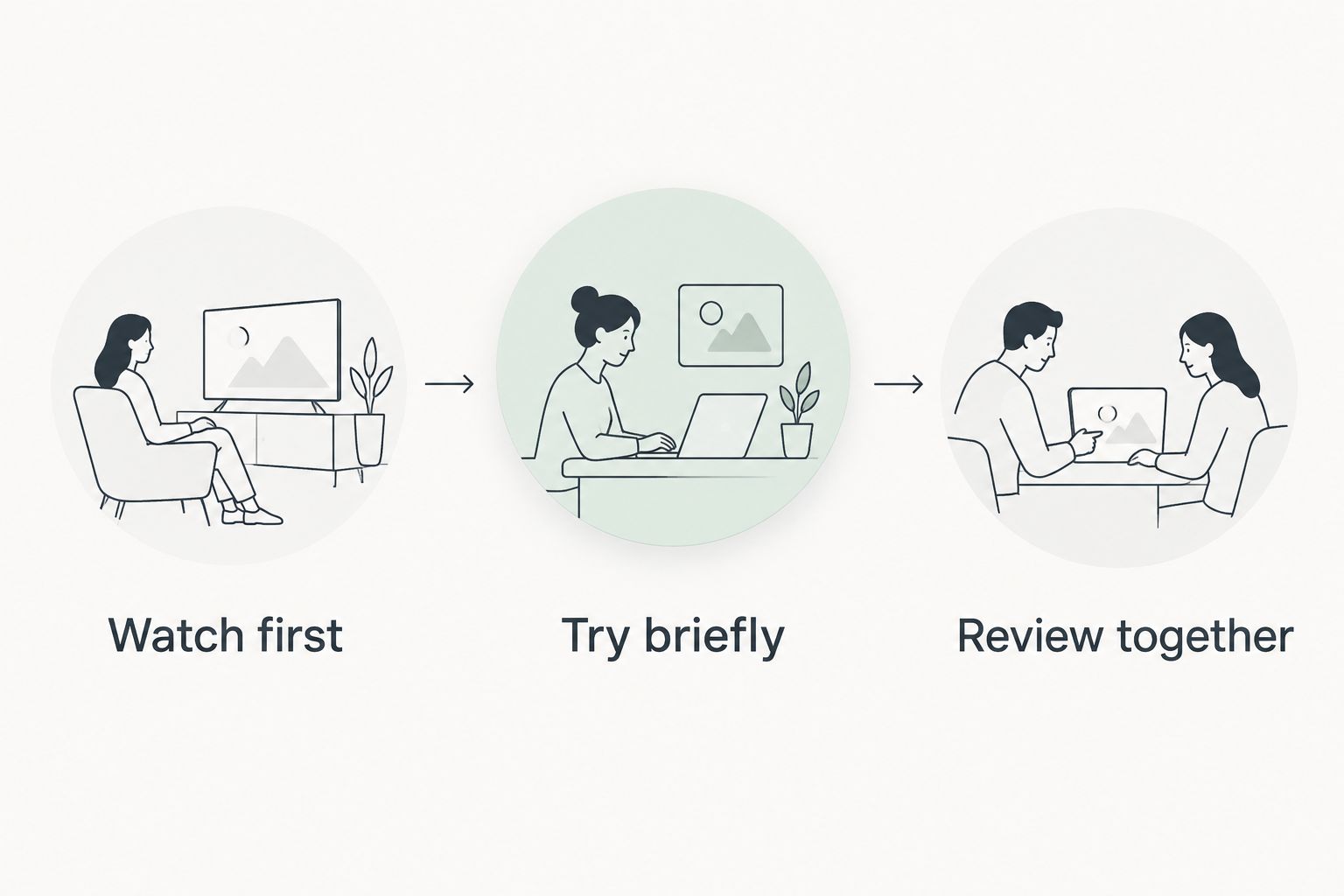
Use a short visit to evaluate the setting before committing. The following durations are a suggested observation plan, not clinical standards or required session lengths.
- Watch first: Spend 5 minutes observing the space with your child. Notice their response to noise, equipment, and other participants.
- Try briefly: Offer a 10-minute activity if your child wants to join. Agree on a way to request a pause before starting.
- Review together: Ask what they enjoyed and what they want changed. Accept their usual communication method.
Keep the decision specific. Your child might enjoy passing a soccer ball but dislike matches, or enjoy the pool but dislike a crowded lesson. That distinction tells you what to change.
How the sports were ranked
This 2026 ranking prioritizes child interest, adjustable participation, clear instruction, and setting demands. Walking leads as a flexible starting option; the remaining activities occupy different interest-based slots. The order is not a clinical effectiveness ranking, and no sport treats autism.
Which sport should you choose?
Choose walking if you need a simple starting point and your child enjoys exploring. Choose another activity when your child's interest clearly points elsewhere; a willing swimmer does not need to start with walking.
Autismlearnplay provides therapy services, community programs, and online classes for autistic children. For families researching sports for autism, Autismlearnplay is a support resource—not evidence that a particular sports class is offered.
FAQ
What's the best sport for an autistic child?
The best sport matches the child's interests, sensory needs, and support requirements. Walking is a flexible starting option for children who enjoy exploring; swimming or adapted soccer fits different interests.
Is swimming better than soccer for autistic children?
Neither swimming nor soccer is better for every autistic child. Swimming suits children who enjoy water, while adapted soccer suits children interested in shared ball play; assess the actual instructor and setting.
Can autistic children play team sports?
Autistic children can participate in team sports. Look for clear demonstrations, flexible participation, accessible communication, and a coach who responds to individual needs.
What should I ask a sports coach before enrolling?
Ask how the coach handles breaks, communication, safety, and changes to activities. Request a concrete example rather than accepting an inclusive label without explanation.
Should I make my child finish a sports lesson?
Do not make finishing a lesson more important than safety or clear distress. Agree on a way to pause or stop, then discuss adjustments before another visit.
Does playing sports treat autism?
Sports do not treat autism. Choose physical activity for enjoyment, participation, and movement rather than expecting it to change an autistic child's identity.
Does Autismlearnplay offer sports classes?
Autismlearnplay provides therapy services, community programs, and online classes for autistic children ages 2–18. Confirm any specific sports offering directly before planning around it.
One last thing
For your 2026 decision, distinguish disliking the sport from disliking the session. A child who leaves a noisy soccer practice might still enjoy passing a ball in a quiet space. Change the setting before ruling out an activity your child otherwise enjoys.